








Creating a home office that feels both cozy and productive can make a big difference in your work routine. When your workspace is inviting and well-organized, it boosts focus and reduces stress, allowing you to tackle your tasks with ease. Whether you have a dedicated room or a small corner, these tips will help you set up a home office that supports your work and well-being.
Choose the Right Location
Selecting a spot in your home where you feel comfortable and can minimize distractions is the first step in creating a productive office space.
– Natural Light: Try to place your desk near a window. Natural light helps reduce eye strain and keeps you energized.
– Quiet Space: Pick a quieter area away from daily household noise like TVs or kitchen activities.
– Privacy: If possible, choose a space where you won’t be interrupted during calls or focused work.
Invest in Comfortable Furniture
Your comfort is key to staying productive. Choose furniture that supports good posture and suits your workflow.
– Ergonomic Chair: A chair with adjustable height and lumbar support helps prevent back pain.
– Proper Desk Height: Your desk should allow your forearms to rest comfortably while typing.
– Additional Seating: If space allows, a small comfy chair or couch can be useful for breaks or reading.
Organize for Efficiency
A cluttered workspace can distract you and slow down your work. Keep your office organized to focus better.
– Declutter Regularly: Remove unnecessary items from your desk and shelves.
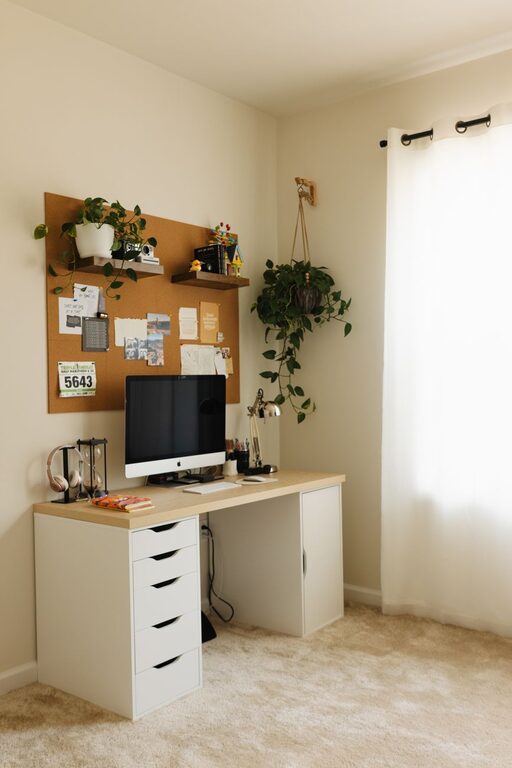
– Storage Solutions: Use shelves, drawers, or filing cabinets to keep papers and office tools tidy.
– Cable Management: Use clips, ties, or cable organizers to prevent cords from becoming a tangled mess.
Personalize Your Space
Adding personal touches makes your office more inviting and can boost your mood.
– Decorative Items: Photos, artwork, or plants can add warmth and character.
– Color Choices: Choose calming or motivating colors based on your preferences and work needs.
– Lighting Options: Add a desk lamp or soft lighting to create a cozy atmosphere, especially for late work sessions.
Create Zones for Different Tasks
If your space allows, dividing it into distinct zones can improve how you work.
– Work Zone: Your primary desk area for computer work and calls.
– Creative Zone: A small space for brainstorming, sketching, or reading.
– Break Zone: A spot for stretching, meditation, or quick rest can help recharge your energy.
Manage Technology Wisely
Ensure your technology setup supports, not hinders, your productivity.
– Reliable Internet: A strong, stable internet connection is essential for remote work.
– Quality Equipment: Invest in a good monitor, keyboard, and mouse to reduce fatigue.
– Minimal Distractions: Use apps or settings that minimize notifications and interruptions.
Maintain a Healthy Routine
Your environment supports your habits, so create a routine that keeps you healthy and productive.
– Regular Breaks: Use a timer or app to remind you to stand and stretch.
– Hydration Station: Keep water nearby to stay hydrated throughout the day.
– Air Quality: Open windows when possible or use an air purifier for fresh air.
Final Thoughts
Designing a home office that balances comfort and functionality takes some planning but pays off with improved focus and enjoyment of your work. Remember to keep your space flexible and adjust it as your needs change.
By choosing a great location, investing in comfortable furniture, staying organized, and personalizing the space, your home office can become a place you look forward to spending time in—helping you to be both cozy and productive every day.